Saiyō framework
The Hiring Maturity Model
Five stages from ad-hoc hiring to a repeatable, measured hiring engine.
What the framework says
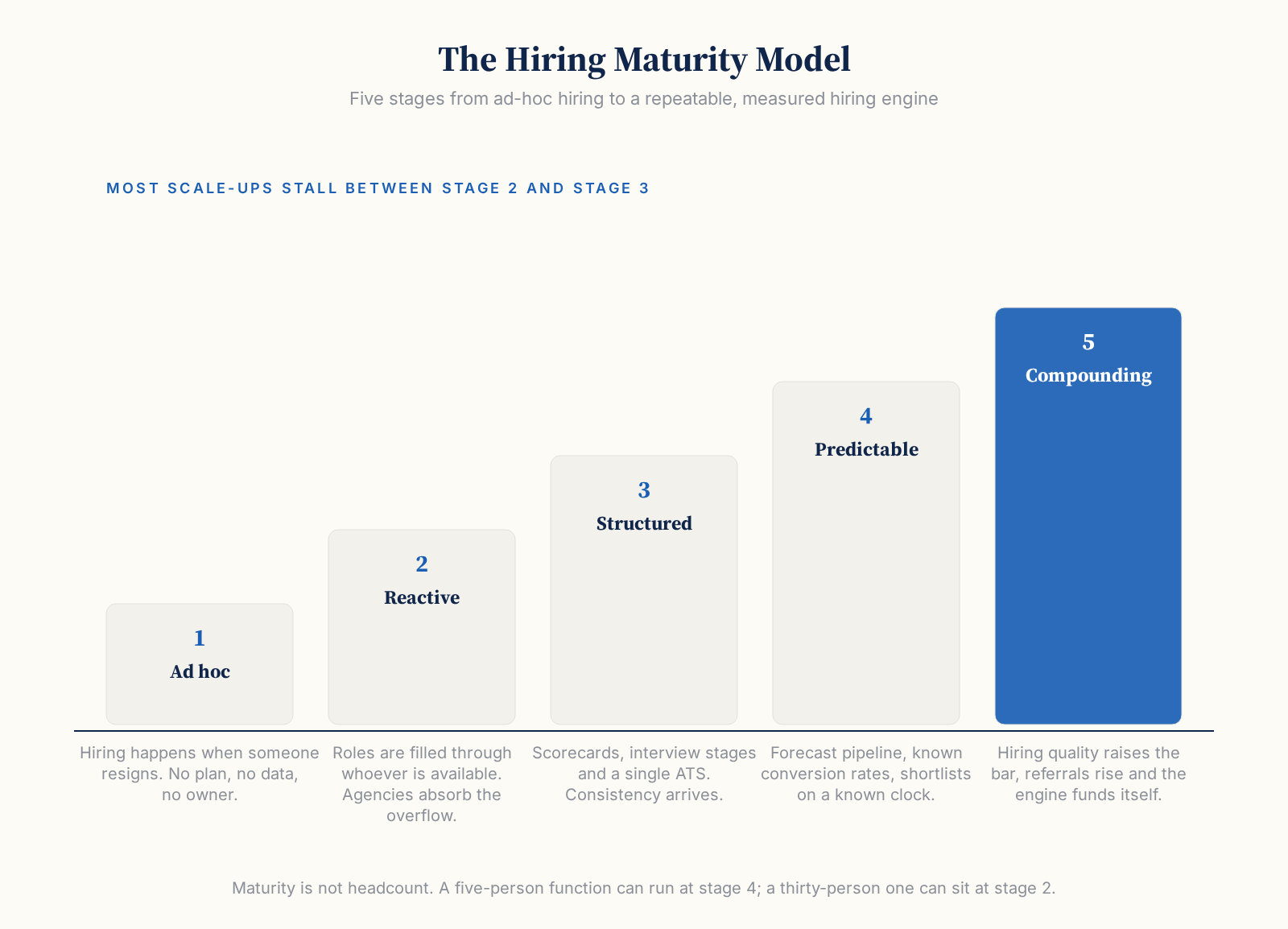
Stage one is ad hoc: hiring happens when someone resigns, with no plan, no data and no owner. Stage two is reactive: roles are filled through whoever is available and agencies absorb the overflow. Stage three is structured: scorecards, defined interview stages and a single ATS bring consistency. Stage four is predictable: forecast pipeline, known conversion rates and shortlists on a known clock. Stage five compounds: hiring quality raises the bar, referrals rise and the engine funds itself. Maturity is not headcount. A five-person function can run at stage four and a thirty-person one can sit at stage two. Most scale-ups stall between stages two and three.
When to use it
You need a shared language for where the hiring function is today and what the next investment should buy.
How to apply it
- 1Score the function honestly against the five stages using evidence, not intent.
- 2Pick the single constraint holding you at the current stage rather than improving everything at once.
- 3Define what stage-complete looks like in measurable terms before spending on tooling or headcount.
- 4Re-score every two quarters; maturity slips as fast as it climbs during rapid scaling.
The common mistake
Reading maturity as headcount. A five-person function can run at stage four; a thirty-person one can sit at stage two.
Read the full guide
Building a Predictable Hiring Process
A predictable hiring process has defined market, agreed evidence, clear ownership, consistent interviews and decision deadlines that are respected.
Open the guide