Saiyō framework
The Talent Accessibility Pyramid
The best candidates rarely apply. Access is layered.
What the framework says
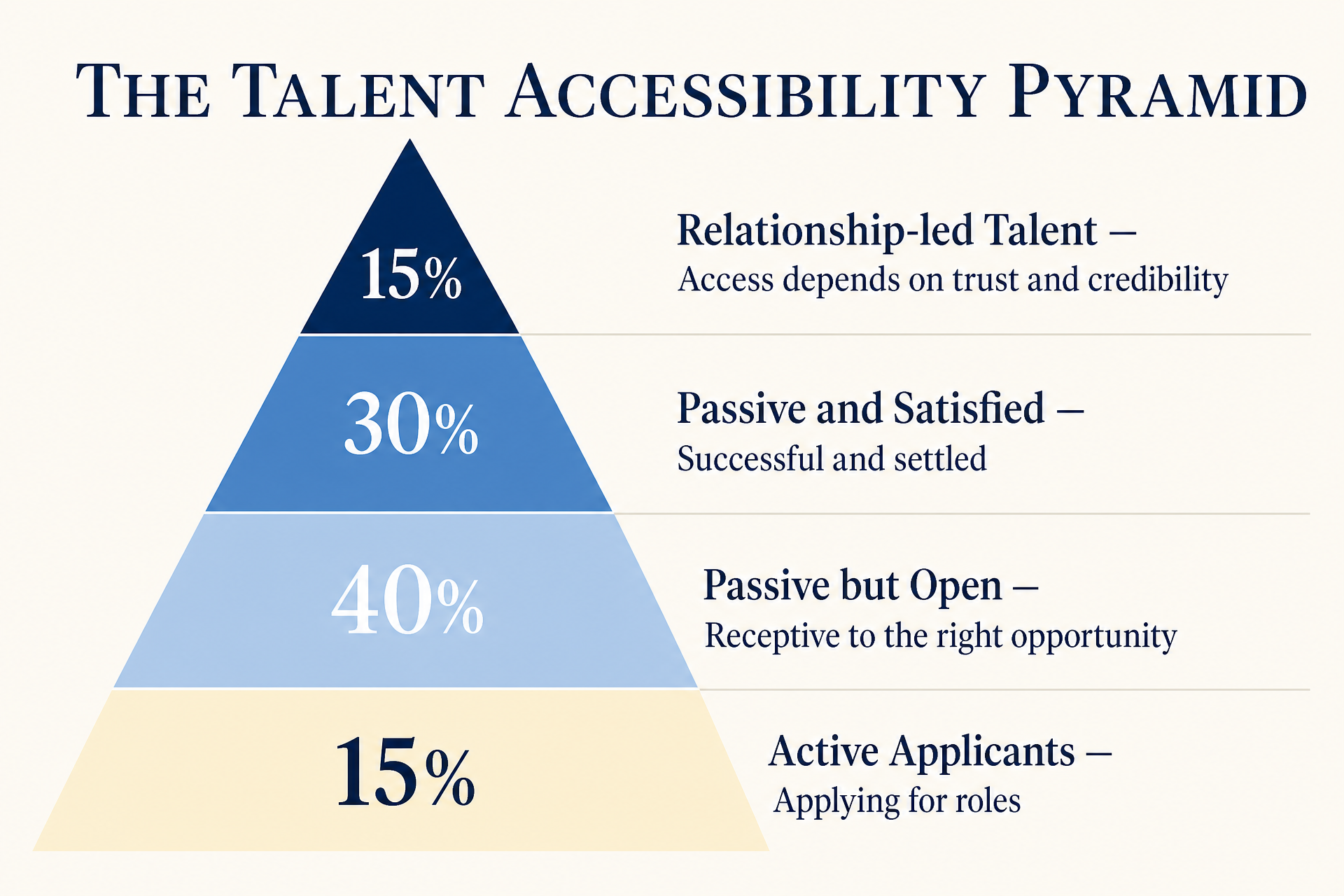
A four-tier model of how accessible the employed talent market really is: roughly 15% active applicants, 40% passive but open, 30% passive and satisfied, and 15% relationship-led talent. Most inbound recruitment operates on the first tier only.
When to use it
You need to explain to a board or hiring manager why an advertised role is not attracting the calibre you expect.
How to apply it
- 1Estimate which tier your current channels actually reach. Job ads and inbound reach the active tier only.
- 2Match the channel to the tier: advertising for active, outreach for passive but open, relationships for the rest.
- 3Plan timelines from the tier you need, not the tier you can reach today.
- 4Judge a search by the depth of the market it reached, not by the number of applicants it produced.
The common mistake
Assuming a quiet response rate means a quiet market. In most specialist markets, over 80% of the qualified population is passive.
Indicative distribution based on analysis of Gallup, LinkedIn and wider talent-market research. Actual accessibility varies by role, seniority, geography and market conditions.
Read the full guide
What is embedded recruitment?
Embedded headhunting combines the proactive search capability of a specialist headhunt firm with the operational integration of an internal talent team.
Open the guideRelated frameworks
The Market First Method
Map the entire relevant talent market before writing a single job spec.
The Reactive Hiring Cycle
The self-reinforcing loop of open roles, agency spend and quality drift.
The Hiring Operating Model
Four mutually-exclusive delivery models: internal TA, agency, RPO and embedded headhunting.